Showing posts with label books. Show all posts

Wednesday, August 27, 2014

Review: The Miseducation of Cameron Post by emily m. danforth

"So when Grandma met us on the front steps in her purple housecoat, and hugged a stiff Mr. Klauson beneath the orange glow of the porch light, the millers swooping around their awkward embrace, and then sat me on the couch, and gave me the mug of now lukewarm, too-sweet tea she had been drinking, and wrapped my hands in hers and told me that she was just sitting down to watch TV when the doorbell rang, and it was a state trooper, and there had been an accident, and Mom and Dad, my Mom and dad, had died, the first thing I thought, the very first thing, was: She doesn't know about Irene and me at all. Nobody knows."

There are a lot of reasons readers read.

They read because they look to be entertained. Because they look for escapism. Readers read in order to better align with the world and to better understand it. They read because there is a human instinct in us all to learn and listen and allow others to be heard - because we know, overall, that others have voices as well.

There are a lot of reasons writer write.

They write because the people they seek to entertain the most are themselves. Because it's their own escapism, although sometimes it's because it's their job. Writer write in order to better align with the world and explain their understanding of it, or somebody else's understanding of it through the lens of a character. They write because there is a human instinct in us all to learn and listen and be heard - because we know, overall, that there are just some messages best passed on through literature.

When these motivations line up, something interesting happens: best case, it becomes a best-seller. Well-known. Fades after a few years, but always sort of known as a "good book". When they don't line up . . . well.

That leads to banned book - and all of a sudden, they shoot past bestsellers and are known, almost forever, as being banned.

Today, I want to discuss The Miseducation of Cameron Post by emily m. danforth.

***

I'm going to have to start by explaining that this book, in the last few months, has developed some history. I don't want to bore you with the whole story, because it's really a roller coaster ride and it's just too long to go into. Besides that, I actually talked about it before. The only update you need is that the Cape Henlopen School Board decided to remove the WHOLE LIST in order to quell discontent, but that's another story for later. Now, I'll be the first to admit that you don't need to know the motivation behind this to enjoy the review, but I did want to bring attention to the reasons why. Moving right along.

Oh, and one more thing: I will refrain from spoilers in the majority of this review, but I will loosely refer to some of the plot, especially the plot mentioned explicitly on the back cover. So, y'know, consider yourself warned?

***

Here's a big shock: I was led to this, once again, by the Diversity in YA tumblr. I get all my good reads from them, to be honest.

As I mentioned before, I was dragged into this because of the news surrounding it. It's no secret on this blog that I happen to be a woman who is part of the LGBT community; I call myself bisexual homoromantic, although I associate better with the label "lesbian" these days. Anyhow, when this book got banned by the Cape Henlopen School Board for "swear words", I decided that I needed to get my hands on the book at some point. I picked it up from my local book store at the end of July, after a two week wait! The wait was worth it though - it took me about a week to read it, mostly because I didn't really get into it until halfway through. Even so, I think it could easily be read in a few days (although not 24 hours - you'd have to be really hardcore to do that. Although, I read half of it in a day, so eh? Mileage).

***

The book is told in first-person perspective from the view of the main character, Cameron Post, from her time before the summer of middle school to the summer after her sophomore year of high school. It spans the ages 12 to 16/17 (I assume? It wasn't clear near the end) and starts at the first day or so where Cam begins to realize that maybe she's not so straight. It's told in past tense, so the voice we hear is the voice of a distant Cameron in the future, but that doesn't take away from the storytelling.

She has a wonderful voice, which can be both very introspective and very descriptive of the action around her. Many of my favorite parts were when she talked about her personal thoughts in regards to her actions, which allowed readers a glimpse into her mind. For a book like this, I think it's imperative to do that; because this comes off strongly as an "issue" book*, it's really important to make sure the character is relatable and fully developed (spell check, I refuse to believe that "relatable" isn't a word. Stop feeding me these lies)!


*I know that there may be some people who take issue with me calling it - well - an "issue" book. The reason I label it as such is because without the issue, Cam's homosexuality in a conservative and Christian area, there would be no story; the story hinges on that fact. Of course, that's not to say that every instance of homosexuality makes a book an "issue" book either - my rule of thumb is that if it can work without the issue, then it's not an issue book. Again, I hope that doesn't offend anybody.
***

As I mentioned before, I'm going to talk about some elements in plot. There's only one clarifier that I'll throw in, but I'm going to mostly stick to what you can learn from the back cover and expound on that. Okay? Okay.

First off: dead parents in a car crash. Cliche? In most circumstances, yes, but danforth is careful to make it hinge together just right, so props to her!

Second - and this is the clarifier - no, the main character doesn't participate in a move. The blurb says ". . . Cam is forced to move in with her conservative aunt Ruth and her well-intentioned but hopelessly old-fashioned grandmother", but really, they move in with her. It really bothers me that the blurb doesn't say that; it's misleading. I kept reading and thinking, "So when the heck does she move?" (PS: Spell-check, calm down, "intentioned" is TOTALLY a word, you dip.)

Next point is about Coley Taylor. Coley Taylor, a cowgirl who becomes a very close friend to Cam, becomes the impetus for many of the book's events, especially in the second half. Now, anybody who's come within ten feet of an LGBT romance is going to know: yes, she becomes a "love interest" of sorts. And this is part of the plot that I do want to go into some detail on, so I will spoil, so CAREFUL:

...but yes, there is a sex scene. Of sorts. It's not explicit, and it's not even super sexy, but there is one in there. And to make the spoilers worse, um, there's actually two. It's complicated though. Shh.

Minor spoilers over - but now I want to get into some major ones. Yes, they are plot-related. Yes, this is my (sort of) last part of the review. BEWARE.

***
***

They send her to a f*cking rehabilitation center for gays.

...that whole part of the book makes me very, VERY glad that I live in this day and age.

First off, I just want to clear up the myth for anybody that doesn't know, but the whole "convert somebody to hetero" thing? IT DOESN'T WORK. It's a repression of somebody's being that ends up becoming demeaning, self-hate causing, and even self-harm causing. I'll get to that in a moment.

I am sincerely lucky. I am lucky to be blessed with parents who, while maybe not completely understanding of my situation, are still okay with me being who I am. I have never had to hide from them the fact that I was gay/bi/whatever-the-hell-I-am, and that's very good. I know others haven't had the chances; my first girlfriend, even, couldn't tell her mom she was a lesbian for fear she'd be kicked out. It sucks, I know. But I'm very lucky I haven't been there, and very thankful.

What makes it even worse in my eyes is that Cameron Post goes to a Christian institution, not because it's Christian, but because it truly takes a religious standpoint on an issue and then hammers it like it's word of God. Wait, maybe that's the point. Crap. EITHER WAY, it leaves no leeway. Religion is a very, very sensitive topic, and to use it as a way to make people change is very potent. It's not so bad with people who need the motivation of some God or something to motivate their actions, but it can be incredibly damaging for those who are told that they are sinners for things they cannot help. I've heard the horror stories, I won't get into them.

Anyways, but that was horrifying, and a lot of what was discussed in that part of the book was fucked up. I won't even hide that. It was fucked. Up. I mean, it's emotional abuse, right? All privacy was denied. You were left in a dorm with a roommate of the same-sex with a desk and bed. You couldn't even decorate your room without permission. And then you spend the rest of the time in classes or in a one-on-one session discussing the "root" of your "sin". It's like a really fucked-up version of counselling. That's bound to mess with somebody.

And SPEAKING of messing with somebody, here's the most horrific part of it, and that's this: at some point during this latter half, one of the side characters has an emotional breakdown. I hesitate to call it mental, even if that's what it was, but I digress. Point being: this character breaks down, flips his shit, it's a big deal.

And then he goes to the hospital.

Why?

HE MUTILATED HIS GENITALS AND POURED BLEACH ON THEM.

I know what you're thinking: either "Oh god, that's horrible!" or "Really? Like that's real". But it is. That's what happens when you're made to repress a part of yourself and think that a natural part of you is sinful. There are people who off themselves because of it. Hell, there are people who disown children because of it! It's bloody, and it's scary, and it's gross. But it's real. Oh, god, is it real.

The second part of this book is definitely scary, although that's by my standards, so take it with a grain of salt.

But that doesn't mean it's not real.

***
***

Oooh geeze. Let's wrap it up.

Use of Voice: 9/10. What, you say I changed my point system? Well I say SHH. Anyways, wonderful voice, even if difficult to follow sometimes. Overall, really really good. (Yeah, I'm tired as crap. I slept 2 1/2 hours the night before I drafted this. UGH.)

Style: 7/10. Room for improvement? A bit ramblely, although I have no room to talk. Still good though, better than average. (Spell check, shut up. I can type what I want, even if it's "rambley".)

Plot: 10/10. For being so real about it all.

Readability: 7/10. Again, I had to slog through it at first, but then it picked up and I was like "WHOO".

Banned Book: 10/10. What, you say I just added a random category? What do you mean? Oh, the banned book thing. Well that may be becaUSE BANNED BOOKS ARE AWESOME.

Averaged: 8.6/10. Yeah, that sounds about right.

OVERALL...read it. Just read it, okay? I don't care if you're gay, straight, bi, trans*, whatever. This is a must-read, NO MATTER YOUR AGE...I say that to all you freshman. YOU HAVE MY PERMISSION TO READ THIS BOOK.

***

And now, with the review over, I can type the rant that I've been wanting to go on ever since the school board decided to get rid of the entire school list for incoming freshmen. Please keep in mind that I have spoken to them before via email and was very polite, professional, and on-topic about the issue at hand. I got one response to that email, which I really appreciate. However, that was a good two months ago, and that was before the list was taken away. With that in mind.

Cape Henlopen School Board?

...you disgust me.

When I read The Miseducation of Cameron Post, I went into it with an open mind and an even more open heart. I knew what I read would hit at a deep part of me, the part that is very scared and vulnerable about my sexuality. I live in the closet; I'm open to family and a few friends. When I move to university (in a few days - aaah!), I will begin to live openly about my sexuality because I am sick of being afraid. I know what it's like to question and wrestle with sexuality. I'm still wrestling now.

With that in mind, I read The Miseducation of Cameron Post. I read all of it. Every last bit.

...and you guys have some major fucked-up shit going on in your part of the neighborhood if you think that this is an inappropriate book for freshmen.

For one thing, the thing about the "swear words" is total bullshit, and you should know that. Thinking back on it, two weeks later, there were no swear words that stood out in my mind except for maybe one: 'dyke'. It was used in a derogatory manner, but it's also a word that is on the way to being reclaimed by some of the lesbian community. AKA, even that's not so bad. So the jig is up on that, although it has been for a while. Stop pretending that it isn't.

For another thing, I can tell you that there's another non-homophobic reason why you might've taken the book off the list, and that would've been for a fairly violent scene nearing the end of the book. What violence, you ask? The mutilation of one's genitals after a fairly epic emotional breakdown due to the forced repression of a part of one's self, that part namely being homosexuality. I could see that being a reason why one would take the book off the list, and I could imagine that being something to latch onto. "Oh! Yes! The violent scene! Yes, we can't promote this book! People might take razors to their genitalia!"

Sorry, though, that's still bullshit.

The most important thing to remember about that scene is that it's real. I said it up there in the review. It's a very scary thing, but it's also real. Would you deny that there are freshmen, sophomores, even juniors and seniors who self-harm? Would you deny how destructive that is? The character that chooses to harm himself ends up in the hospital for his injuries, and before he even injured himself, he had a meltdown. He had a total breakdown that traumatized himself and the ones around him. And while it's horrible, it's also important, because it just goes to show how terrible these "treatment" options for homosexuality are! Isn't that important? Isn't that something that needs to be heavily acknowledged lest we forget and try to "cure" these people again?!?!

You had no reason and no excuse to get rid of this book. Oh, except for one: "There was homosexuality in it, and you can't expose that sort of thing to children. It ruins them!" Notice how fuckin' bigoted that sounds. Notice how cruel that sounds to the people who are homosexual, bisexual, any-kind-of-not-hetero-sexual.

Look: I know how the myth about "exposing homosexuality to children" goes. Show the children any kind of "this is okay" to homosexuality, and suddenly people are running around kissing the same sex, never getting pregnant, and then the apocalypse happens where we all realize that Jesus meant loving everybody despite differences and we all go to rapture-phase heaven. I get it. Scary as all fuck, the homo will turn us all, dramatic gasp. So I'm sure you think you're doing a good thing by not letting the kids read it.

Except your not.

Because that myth is just that - a myth. It's not rooted in reality at all. Do you want to know what exposure to homosexuality actually does? It shows children that homosexuality is . . . normal. Not strange, not bizarre, not wrong, but normal. It's so, so important, because if you show kids that it's normal, it makes them much more comfortable with sexuality as they grow older. I became an ally to the LGBT community probably in seventh grade, maybe even before that, and I realized I was bisexual/lesbian the summer before my junior year of high school. I was old enough, at that point, to understand that all of it was normal and okay. It didn't need to be strange and foreign because it wasn't. It was a perfectly normal thing that people just didn't understand.

The truth is that by hiding away a normal thing from kids, like homosexuality, you leave them in a fog of ignorance, which quickly leads to fear. Without that exposure, kids like those grow into adults and learn about homosexuality, and they either A) quickly look away, B) attack it with their ignorance, or C) realize that they're part of that group and fall into a type of self-loathing for not being part of the norm. Isolation from a topic creates fear and angst about that topic. I should know. I hate being in ignorance.

The Miseducation of Cameron Post is such a great book because it's an honest account and look into the life of a girl who likes girls in the 1990s, and it's written in such a way that the main character's musings align with ours. It's a fantastic introduction in a very vast topic, and it's tackled from so many different angles that it's relatable. Close. It helps to push away that fog and ultimately makes the characters more understandable.

Cape Henlopen School Board, by taking away the permission of these kids to read this book (because you must know, many kids wouldn't read at all if their schools didn't promote it, and there are parents who won't let their kids read books that aren't approved by the school), you've taken away their access to something that can make them better understand the world around them. You've taken away their ability to gain interest and knowledge about an issue that is so, so important in this world. I mean, for god's sake, we're almost halfway there in the United States to having same-sex marriage in each state! Your own state allows it!

...how pathetic is that, when you're banning a book for homosexuality in a state that allows same-sex marriage...with the excuse that "it swore too much"???

School Board, you are not full of educators. You're full of bigots. Educators see the places where learning can be done and reach for those opportunities in order to help teach life lessons to those who need them the most. You . . . you're doing the exact opposite. And I pity every single freshman who now cannot read that book due to your ignorance.

But most of all, I pity your own ignorance.

I pity it.

***

I know it's been a while since I wrote a post, and I am sorry. But I am about to move, so I don't know how long this is going to last. Hopefully I'll get settled and into my classes and things will be more normal, but I can't make any promises. We'll just have to see. I miiiiiiiiiiiight write another post before I leave about the subject of homosexuality again, but I don't know right now.

I do apologize if I offended anybody with my rant, but I feel like every word of that needed to be said. Miseducation is a book I wish I had read when I was a freshman, just because it would've helped me understand more about myself and my sexuality at that time. Perhaps then, I would have a better grip on it now (although then again, I may never have a truly steady grip on my orientation). In any case, I apologize for any offense - I've just been sitting on that rant for far too long.

Friday, July 4, 2014

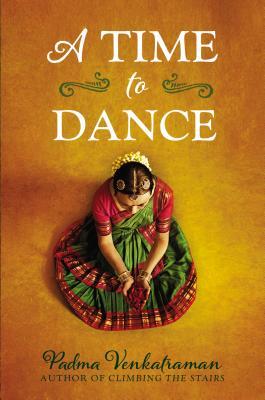
Review: "A Time to Dance" by Padma Venkatraman

"The priest's laugh rumbles up into my ears. 'Place a hand on your chest. Can you feel Shiva's feet moving inside you?' I press on my chest. Feel bony ribs. Under them, thumping, faint echoes of a dance rhythm: thom thom thom. Shiva outside me, gleaming in the temple sanctum. Yet also leaping, hidden inside my body."

I regret, so often, that my own Time to Dance has passed. I learned the steps of ballet and tap when I was small, but due to my parents' unpleasant encounters with my dance instructor (the details of which I know little of), I was pulled from dance. I couldn't have been more than ten. Probably younger than even that.

I miss those times. I miss taking classes, and I wish I could go back, struggle a little more, so I could continue. Who knows what kind of person I would be now if I had?

I miss those times - but this book makes me miss them more.

Today, I'm reviewing A Time to Dance by Padma Venkatraman.

***

I discovered this book by Diversity for YA's tumblr. I'm not entirely sure what drew me in at first - maybe the cover art. Actually, the cover art is definitely a part of it; I love the rich oranges that make up the background as well as the greens and reds of the sari the woman seems to wear. It's gorgeous, truly, and the perfect cover for a book like this. Even the cover's texture is absolutely amazing; it drags me in by the hands. It's certainly not the glossy cover you find on most hardcover books, and I'm grateful for that; it helps transform the book into an experience.

This book took me less than 24 hours to read, and I just finished it. I'll withhold any spoilers until the end, because I know there will be at least one - until then, keep reading. I'll keep it clean of spoilers for now.

***

The main character, Veda, has her own unique voice, and she tells the story from her own unique perspective. Her voice is wonderful - it's graceful and full of emotion and passion. She doesn't hide her thoughts in her voice - she reveals them. And the tragedy that strikes her life doesn't stop her - she continues with that same passion, fighting for what she wants to do the most - dance.

The book is written entirely in a very poetic form. There are line breaks, clear structure - it's like a free versed poem. I do a very similar thing with my own poetry (you can trust me on that part), but Venkatraman takes it to a whole other level. While it's a bit disconcerting to follow at first, it becomes very easy to fall into a rhythm with it, and then it eases up and becomes a pure joy to follow in.

***

I think another part of what made me pick it up was the plot. As I mentioned before, it was featured for being a diverse novel, and in fact, it's not the typical diverse novel I usually pick up - this one does not have to do with sexuality at all, but with ableism. The main character, Veda, is a dancer, and she feels confident and assured in her dancing at the beginning even with her mother's criticisms. However, an accident destroys her right leg from the knee down, and in order to save her, the doctors removed part of her leg and made her a below-the-knee amputee. However, she does not wallow in this - she decides to continue to pursue dance anyway, starting from the very beginning, knowing that she'll find a way to do it somehow.

What I really like is that her accident and "disability" (if you can even call it that - I think it's a touchy term . . .) are not the only parts of the story. There is so much about love and spirituality, to the point where I enjoyed reading every part of everything. It wasn't a "whine and complain about this and that" book - it goes from being about the catalyst, the accident and her "residual leg", to encompass her spirituality and the affection she feels for others.

***

As I mentioned before, a lot of what this book tackled was about ableism. I am a very fortunate person - I have all of my limbs and appendages attached. I am not limited in what I can do because of any part of my body, and I am incredibly thankful for that. I can type at my computer and I can dance like a lame white girl (pardon the dip into nerd culture for that reference), and I've never had anything that truly hampered that.

Veda is different. She loses a leg - she deals with, on occasion, severe phantom pain. I never truly understood what phantom pain was like until I read about Veda's suffering from it. It left me in shock - how painful must it be to lose a limb yet still feel its pain? I remember one night, a few months ago, I'd been sitting at my computer and sitting in a strange way as I worked. When I got up, my right foot was entirely numb - I couldn't even feel the weight I left on it, and I stumbled so many times trying to walk until the feeling returned.

That was hard.

I can't imagine what that must be like for those who never get that feeling back, who don't have the real appendage to even feel with anymore.

A Time to Dance opened my eyes to all of this - how lucky and fortunate it is to have these abilities. But more than that, it also taught me that just because somebody has a prosthetic doesn't mean that they are "disabled" - that's not a fair word. In the book, Veda is referred to being "differently abled", but I'm not sure that's the case either. Because she is abled - she simply has some other, different restrictions in her way than other people, and that's not a bad thing.

***

I'm trying to think if there's anything I didn't like about the book, but to be honest . . . I can't think of anything. Whoo! That being said, I want to start talking about some of the plot points of the book, so it's time for spoilers.

SPOILERS BEGIN HERE.

***
***

Paati was one of my favorite characters. She was obviously a very religious woman and a hardworking one, and I was amazed at her spirituality. Throughout the book, she seems to act as a spiritual guide for Veda, at least until Veda needs to find her own path. I was truly saddened and shocked by her death; I could see the signs of it coming, of course, but it hurt to see her die. Even more than that, I could empathize with Veda when Paati did die; I also had trouble shedding my tears when my own grandmother died. I know very well how she felt.

***

For once, I loved the love triangle in the book! It doesn't last for many chapters, but it quickly ends when Veda's feelings slip past her lips. And not only that, but I love how there weren't bitter feelings within the love triangle at all - when it ended, there was some sadness on Veda's end, but then it moves into a more intimate relationship with her dance instructor, Govinda, and that's where the emotions come in. It's so rare for me to enjoy a love triangle. This was very well done.

***

When Veda starts teaching, I had a lot of curiosity about Uma, and this is part of the reason I decided to review this book. Uma was always wearing a scarf around her face, careful never to let it fall. I was very curious about if it was a religious thing - why doesn't she say if she's religious? - but then Veda confronts her directly and gently, and the scarf falls.

And it turned out that Uma had a cleft lip.

My first thought: oh my GOD! I get it now!

The reason I understood Uma's fear so badly is because I had a cleft too - a cleft palate. Mine wasn't visible, or as visible, as a cleft lip would've been; mine was fixed when I was young, and besides some difficulties with speech (and a nasal quality to my voice that still seems to haunt me - ugh), I didn't have many problems with it. But Uma never had hers fixed, and Veda even mentions that it might've been that her family didn't have the money . . .

I understood, immediately, what Uma was feeling, and that tugged on such a personal note for me that I fell deeper in love with the book. And later, when Veda shows her own prosthetic and sees Uma's scarf fall, my heart sung with joy. Because I think I know how Uma must've felt, and I'm glad she was able to get past that, at least for a little while.

***

SPOILERS END HERE.

***
***

I'm going to go with the same system I used last time and stick with five points.

Use of Voice: 5/5. Veda's voice was strong and unique, and I loved reading it from her perspective. I could understand her pain; I could understand how she felt immediately. That's very rare in a book, I think, to touch so deeply like that.

Style: 4.5/5. It was difficult to get used to, but I think the style complimented the voice so perfectly. I only take off the half point for my struggle to adapt to it.

Plot: 5/5. Brilliant - just brilliant. The book is not just an issue book about ableism, it's also about spirituality. It looks at Veda as a person, not a disability.

Readability: 4.5/5. Again, challenging at first, but overall lovely.

Averaged: 4.75/5. Perfect score - and it would've maybe even made it higher!

OVERALL...this book was absolutely wonderful. It showed a deep story about a bright young lady losing her leg and having to adapt as well as covering her spiritual and emotional struggles. Normally, a book like that does not grip me, but this did. I'm definitely sliding this onto my shelf of favorite books!

***

One more thing . . . the type of dance referred to in this book was Baratanatyam. I decided to look it up on Youtube and was not disappointed; check it out.

Wednesday, July 2, 2014

Is it the Cursing, or the Sexuality?

I thought the sexuality thing was supposed to be getting easier. Instead, I feel like there's more that needs to be done than ever, although maybe that's more to do with my hyperawareness about the issue.

What am I going on about, you ask? This. Go ahead; read it. I think it's important that you do, because I really can't sum it up in my words - it's best explained in detail.

Done?

I can't say much about the issue right now, because I'm a little upset about it, but I did take advantage of the emails provided on the website in order to send an email to the school board. Of course, I talked about the sexuality thing. I agree with the writers of the article; it seems much more likely that the issue had to do with sexuality, not the cusses. Let's face it, most teenagers hear cusses every day from their family than they read in a single book.

Here's my real concern, though: as a school board, how can they discourage the reading of a book that would encourage and educate those that pick that same book up?

It seems to me that the school board has taken what is pretty clearly an issue book from their reading list for the reason, "It has a couple of swear words in it". Is that really all? Issue books can help readers identify and empathize with those who are deeply invested, personally, in those issues. It makes it easier to understand your best friend, or even yourself and your same-sex partner. Those issues, especially these days, are REALLY important in high school, where each year is another bumbling jog to figuring out who you are.

Why would you deny that to the people who need it most?

The other issue is that by taking the book off the list, they've merely ensured that people will read it. I mean, I'm considering RIGHT NOW looking up the book and reading it (because I may not have read it, but that doesn't mean I'm totally ignorant!). One of the things I've heard most often about banned books is that people are more likely to read banned books BECAUSE they are banned. Back in April, I was writing Project: Hope and filled out a survey about if it would be banned or not. Answer: Yes. Funnily enough, I was okay with that (it was banned for more than just sexuality. I do not write by the rules).

So, to summarize: I'm irked. I'm irked, and I'm irked because it both discourages the education and empathy towards LGBT* persons while also ensuring that everybody and their dog is about to pick up . . . which really means that the school board just shot itself in the metaphorical foot.

. . . I really hope the school board never gets their hands on this post, now, for saying that. But I want to be honest, and that's just what I think: taking it off the list was a bad idea, and it has a lot more potential for blowing up in their faces than just the scores of emails I'm sure they're getting.

Remind me never to work in education.

(BTW - I used lots of sources when I was talking to them. Check them out.)

ETA: I just remembered: in the link where I learned about this, I read about a couple of booksellers that were donating books to give to people to read, so that way this book could get around. INSTEAD, might I suggest buying a few copies? Let's support the writer, guys!

Sunday, June 29, 2014

Review: "Grasshopper Jungle" by Andrew Smith

"There are things in here: babies with two heads, insects as big as refrigerators, God, the devil, limbless warriors, rocket ships, sex, diving bells, theft, wars, monsters, internal combustion engines, love, cigarettes, joy, bomb shelters, pizza, and cruelty. Just like it's always been."

My feelings about this book are so mixed you could pour them in a pan, pop it in the oven, and pull out a fluffy cake half an hour later. You know what I mean.

Today, I'm reviewing Grasshopper Jungle by Andrew Smith.

***

First off, I want to complement the publishers (Penguin Group/Dutton) for dragging me in by the hair. I found this at my local bookstore and, upon seeing the cover and reading the blurb, was drawn in. I decided to grab the book after some contemplation, and along with another purchase and an extra book called-in, I had a stack of reading to go through. I started this one immediately.

I began Tuesday. I finished today (actually, technically yesterday - today is just two hours old). I read a part a day, skipping Thursday, and finished a few hours ago. I'm still working on digesting all of the story, but I'll do my best to discuss the contents, but I will discuss some spoiler-y stuff at the bottom. Don't worry; I have warnings posted.

***

One of the things that you can complement Smith for is his excellent mastery of voice. He tells the story from the perspective of Austin Szerba, a 16-year old Lutheran boy who has a knack for history and, oddly enough, arousal jokes. Yeah, not the first person you'd think of as a narrator, but a good choice for the novel. Besides, Austin's not the weirdest part of this story, not by a long shot.

Anyways, Smith's use of voice was excellent, exceptional even. The issue was that because of the nature and voice of the protagonist/narrator, things naturally started to get unhinged and hard to follow. While Austin enjoys history and the connections made in history and the present moment, he tends to ramble a lot. And I mean a lot. A lot of what he rambles about carries throughout the book, of course, but not all of it does, and it results in an awkward dance between the story and what's just going on in Austin's head. In addition, it also makes it harder to tell what is happening in the story; while it's not always difficult to piece together the events, there are certainly moments that left me head-scratching.

It was confusing, to say the least.

***

Now, as for the plot.

*intake of breath*

The plot is about how two boys accidentally let loose an army of hungry and horny praying mantises that put their Iowan town - and the world - in grave danger, leaving them the only two who can stop the stampede.

...

I'm seriously not kidding.

The moment I read the blurb, I laughed out loud. I mean, nobody publishes plots like those. That's the type of plots typically joked and laughed about, right? That's the type of plot a twelve-year old would come up with! Despite that - more like because of it - I was prepared to pick up the book and be dragged into a crazy ride.

I mean, it's fun, silly, and still incredibly contemplative.

Oh, and trippy. Really trippy.

...and I'm still not kidding.

***

The other reason I decided to pick up this book was because I had seen the cover of the book before. Where? Online, at the Diversity in YA tumblr. Unbeknownst to me, I'd been on the diversity side of writing for years, since I've been writing about sexuality and LGBT characters since - hmm - 2009-ish? Of course, I was fooling around a little more back then, but I began to delve more seriously into the issue when I began writing Project: Faith. That was not an issue book, of course; I wanted to work in a world where that didn't matter, or at least didn't come clean. The sequel, Project: Hope, did become more issue-oriented.

But enough about me. This is about Grasshopper Jungle. And the easiest way to categorize it is in the same way I categorize Hope - it's issue-oriented, but it's not the main focal point of the novel.

Now, I should introduce two of the main characters: Shann and Robb. Shann, of course, is Austin's girlfriend; Robb is his best friend. The sexuality conflict in the beginning stems from, strangely enough, Austin's oft-mentioned fantasy of having sex in Robb's car with Shann while Robb watched. What eventually transpired was a more serious, gut-wrenching talk about his feelings both for Robb and Shann, which, in some ways, mimic the way many teenagers feel these days. I'd want to hope I'd know - I've sort of been there.

So the subject of sexuality was tackled, and it was tackled in a very meaningful and accurate way. I mean, it's not rocket science, but Smith managed to discuss it without being nasty, crude, or rude. I mean, he talks about sex more crudely because of Austin's voice, but it's all relative.

...an aside note, as I was editing this: Austin, while struggling with his bisexuality, also seems to be dealing with some polyamory as well. I don't know that polyamory is necessarily connected to sexuality - although I tend to think more about orientation than anything - but I will say that I think he did tackle it meaningfully within the context of the story. Could've done that part better, maybe, but he took a chance. Gotta admire that.

***

Voice was grand, plot was trippy, and sexuality was acceptable. Anything I really didn't like?

Yeah, admittedly, there was. And it had to do with keeping track of events.

Now, I don't want to start spoiling stuff yet, but to put it simple, the narrator would discuss his current situation, typically with his friends or something . . .and then he'd suddenly start talking about "on the other side of town" or "at the same time" or "in the meantime", which was incredibly disorienting and not at all fun to read. I mean, I can understand why the story was told that way, because it's discussed more at the end of the book, but it's super confusing in the meantime. I mean, I want to know about the characters I have emotional investments in . . . I don't need to know about the people getting maimed all around town.

The bright side to this is that Smith does a great job of keeping everything connected in some way. For example, there are pieces you don't even think about the first time around, which are then referred to later in the book. And they're even plot significant! It's not an easy task to keep track of that, but it certainly narrows down the number of plot holes. I'll applaud for that, of course, but I still insist that it could've been done better. Flashback if you must - I love flashbacks when done right - but don't interrupt the action, please.

***

I think that I've talked enough about the style points I wanted to cover - for now, I think I'm going to get into spoiler territory about specific points in the book, mostly because there was at least one part I wanted to discuss.

Again, SPOILERS AHEAD.

***
***

First - still loving the cohesion. The beginning of the book where Robb is nosebleeding onto the alley's blacktop is so well-connected to the rest of the plot, especially as we begin to learn about 412E, that it's left me in awe. It's not easy to tie all of those parts together, and especially in a manner where I can still remember that beginning event without having to go back and look for the scene again. Excellent job indeed.

***

That being said, I can't keep up with the names. I know Smith's trying to keep everything neatly tied, but I don't need to know everybody's name, especially the name of the cat the neighbor has. Eeep.

***

The history lessons about Austin's family tree were pretty interesting, although again, there were so many names it was hard to remember. It was cool to read through it, though. Props once more.

***

Which mother is named Connie?! Are they both named Connie?! Good gravy, save me.

***

I need to bring up Shann's behavior in part 4 specifically, because all of a sudden, she turns into a bitch. I mean, I liked her before, but then she suddenly has it put-together that Robb loves Austin and they've kissed and in an instant, Shann becomes Homophobe of the Year. What the hey? That came from south of WTF-land.

I mean, I'm not saying it was bad.

But I did want a warning.

***

And then Shann and Austin fuck everything better.

***

. . . or . . . not?

***

WAIT A SECOND THAT WAS HER FIRST TIME.

I KNOW IT CAN HAPPEN BUT WHAT KIND OF TIMING IS IT THAT SHE GETS PREGNANT?!

***

I  like the plot twists with the Szerba family. And the talk about Eric. Actually, I just like Eric in general.

***

I mean, I don't appreciate the ONE REFERENCE to Eric contemplating suicide. That was weird and out-of-place and, strangely enough, the one thing not followed up on. Eric, don't die sweetie. You sound cute. Getting convinced by two prostitutes to ask for a blow job makes you one of the cutest characters in the book, which is both pretty weird and definitely not something I ever contemplated writing.

***

Lastly - just to say one more awesome thing about the book - it definitely dragged me along for a ride. I could barely put it down, except for the moments where I needed to stop and breathe. Stuff that intense makes me need to put it down and digest. Not only that, but it made me think, which is wonderful and something I want every book to make me do.

***
***

SPOILERS ARE DONE HERE.

***

So, let me sum it up with a five-point system!

Use of Voice: 5/5. Seriously, I loved the voice. It was unique and telling and just something that lots of people aren't good at that Smith is. So congrats on that point.

Style: 2/5. Again, the interruptions in story were disorienting.

Plot: 4/5. Loved the cohesion, and I loved the strangeness in plot. I mean, it could've been handled differently, but it was still fricken' awesome.

Readability: 2/5. I added this because it really was hard to read. The writing, in and of itself, was simple, but the jumping between history and at-the-same-time's and the present moments was unpleasant, and I wasn't a huge fan of it.

Averaged: 3.25/5, which seems about right, actually. I mean, it was WEIRD, and there were parts of it that were out there, but it was a decent read. It's definitely made me think, obviously.

OVERALL . . . if you want a diverse read and something to make you raise your brow, laugh out loud, and tilt your head to one side, grab this book and give it a once-over (or more, if you like). It was a good and thoughtful read, and it deserves a peruse, especially for the way it was written. Andrew Smith, great job on this book - it was a great story!

Sunday, June 15, 2014

In re: "Yes, Adults should be Embarrassed to Read Young Adult Books."

You know, I was going to just chill out and go to bed before I got into this, but my curiosity overcame me. After reading this, I decided to go find the actual article it discusses and give a peruse myself.

So now is my response. Madame Writer:

GET OUT.

You not only insulted the adult community of YA readers by publishing this article, you've also insulted the teenage community reading YA by implying that what they were reading was not as in-depth and important as adult, classical literature. I've been reading YA books since I was eight, and since then, ten years have passed. I'll be moving away to college very soon, and the only way I'm keeping myself together at the seams is with the lessons I learned from YA fiction, about how to handle moving away from home and how to handle loss and loneliness and love. I'm still in one piece and not falling to the floor screaming out my every anxiety because I know that waiting up in my bedroom is a bookshelf full of advice and pseudo-realities that will promise me everything is okay, you'll be fine, you've got this. By demeaning that, you demean the methods that so many of us "young adults" use in order to cope with a world we know so little about. And I'm not even going to get into the implications laid upon those that write YA fiction, god forbid, because I can imagine that many of them might be duly terrified to hear that they shouldn't be reading what they're writing and, as a result, shouldn't be writing it at all. It's really hard to write for an audience when you can't read their focuses.

By taking the stance of the "all-knowing adult", you've severed yourself from not just the adult community, but from the community of people who are using YA to sustain themselves into the "real world". And I believe you owe everybody an apology.

You are entitled to your own opinions. You are not entitled to shove them down others throats with the excuse "I'm an adult, I know better".


If you really want to read the article, it's here.

Saturday, April 12, 2014

Anna and the French Kiss


I wish I could come up with a better thought than "READ THIS BOOK RIGHT NOW IT HAS SO MANY FEELINGS AND YOU WILL LOVE IT", but unfortunately, my brain is run dry. Working on so much stuff takes a toll out of you, and here it is, knocking me down a little! Not that I mind at all; I love the work, and though the last few days have been particularly emotional, I'm really really happy with the stuff in my life!

Anyways, this is probably one of my favorite books now - Anna and the French Kiss by Stephanie Perkins. I heard about this book through John Green at the Vlogbrothers (you'll have to search it yourself - Youtube's decided to glitch on me!), and my reaction basically mirrors his: I thought, "Okay, I'll buy this and read this", and then I couldn't put it down. I finished it in twenty-four hours! Not bad for a book this size.

Anyways, I really recommend that you buy and read it if you're interested in adorable love stories where the ending is happy and the drama keeps you on your feet. My only complaint is that it's definitely a little back-and-forth-y, something that's pretty common in romance (or at least I think so), but that aside, it's a flat-out amazing book, and if you're into YA romance, this is definitely the way to go!